
Show table of content Hide table of content
Hamilton Palace, a sprawling estate buried deep in the Sussex countryside, was meant to rival the grandeur of royal residences. Instead, it stands today as a crumbling monument to one man’s unchecked ambition — the largest unfinished private mansion in Britain. Its story is equal parts fascinating and cautionary.
A billionaire’s dream bigger than Buckingham Palace
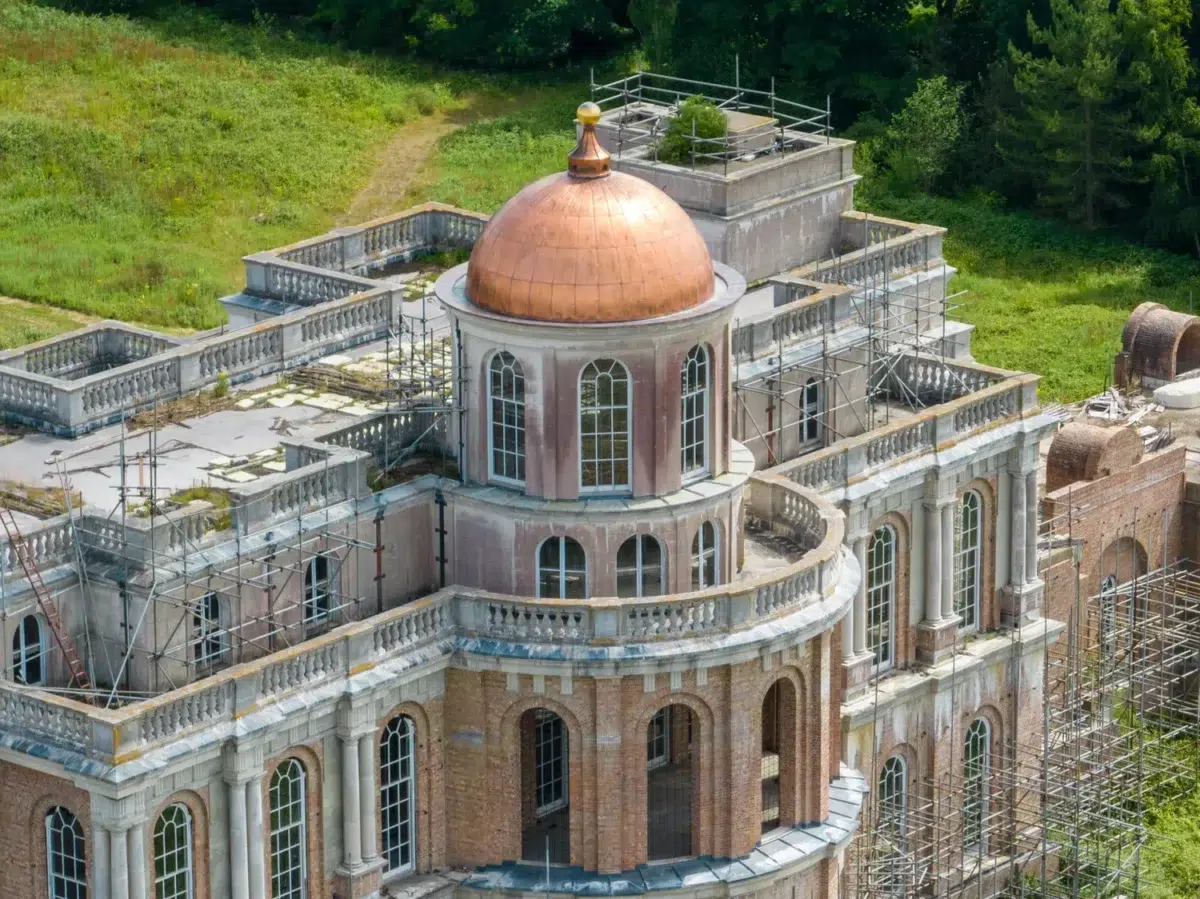
In the 1980s, multimillionaire Nicholas Van Hoogstraten set out to build something extraordinary. His vision for Hamilton Palace in East Sussex was breathtaking in scale : two massive wings, a gilded dome, a mausoleum beside a lake, and a total footprint that would surpass Buckingham Palace itself in size. This wasn’t a modest country house project — it was a statement of wealth and power carved into the English landscape.
The estimated construction cost reached £40 million at the time, which translates to roughly €143 million in today’s money. Van Hoogstraten reportedly worked obsessively on the concept, sparing neither expense nor time in the early decades of the project. The ambition was clear : to create a private palace that could stand alongside Britain’s most iconic royal buildings.
To put the sheer scale of the estate into perspective, consider the key figures involved :
| Feature | Hamilton Palace | Buckingham Palace |
|---|---|---|
| Ownership | Private (Van Hoogstraten) | Crown Estate |
| Construction began | 1980s | 1703 |
| Estimated cost | £40 million (then) | Multiple state-funded phases |
| Current status | Unfinished, abandoned | Fully operational royal residence |
The contrast between these two buildings could not be starker. While Buckingham Palace hosts state ceremonies and welcomes millions of visitors, Hamilton Palace sits rotting behind broken fences in rural Sussex, a ghost of its intended glory.
Four decades of construction that never finished
After more than 40 years of on-and-off building work, Hamilton Palace remains incomplete. Scaffolding still clings to its exterior walls. Construction materials lie scattered across oversized, unfinished rooms. The gilded dome — one of the most ambitious architectural features planned — was never realised. The estate looks less like a palace under construction and more like a site long since abandoned.
Local residents have grown increasingly vocal about the situation. The building sits in sharp contrast to the rolling green countryside that surrounds it, creating an eyesore that has dragged on for decades. Neighbours have branded the property “the Sussex ghost house”, a name that captures both its emptiness and its eerie, unsettling presence in the landscape. One local went further, describing it bluntly as “the biggest slum in Britain”.
Safety concerns have become particularly pressing. A local resident told the Manchester Evening News : “The site is not secure. The fencing is constantly pulled down and young people get in and head towards the house. The place has become a real magnet for bored teenagers. It is high time local authorities carried out safety inspections on the property, because those who get inside risk losing their lives.” These are not minor complaints — they represent a genuine public safety risk in the heart of Sussex.
The key concerns raised by the local community include :
- Persistent breaches of the perimeter fencing
- Teenagers and trespassers regularly accessing the site
- Structural instability of the unfinished building
- No visible maintenance or security management
- Absence of meaningful intervention by local authorities
Just as archaeologists piece together the past from ruins — much like the researchers who identified the oldest human-made structure ever discovered, dating back at least 23,000 years — those walking through Hamilton Palace today find themselves deciphering the remnants of a colossal private dream that simply fell apart.
An absent owner and a palace with no future
Where is Nicholas Van Hoogstraten in all of this ? Largely absent. Despite owning the property and having initiated one of the most audacious private building projects Britain has ever seen, he has stepped back entirely from managing the site. The estate drifts deeper into decay while he remains unavailable to local residents and officials alike.
NewsIs there fabric softener left in the washing machine drawer? It’s not trivial, your machine may have this issueIn an interview with the Express, both Van Hoogstraten and his son Max attempted to explain the prolonged stall. They acknowledged “major problems” with the construction process and admitted that completing the palace is “not currently on the agenda.” Max Van Hoogstraten added, however, that his father “fully intends to finish it” — but that he continues to work 16 hours a day, every day, leaving little room for overseeing a project of this magnitude.
That explanation has done little to satisfy the community. A man who works 16 hours a day is presumably generating income — yet the palace that was meant to be his life’s architectural legacy continues to decay. The financial resources that once fuelled ambitious design plans seem entirely disconnected from the crumbling reality on the ground.
Interestingly, the same disconnect between grand ambition and practical reality often appears in other areas of property design. While Hamilton Palace rots in Sussex, elsewhere in Britain homeowners are completely rethinking interior spaces — for instance, walk-in showers are being replaced by spa-style wet rooms in new builds, reflecting a very different relationship between wealth and functional living spaces.
NewsMosquitoes are already coming back — an expert explains when to act to avoid an infestationHamilton Palace is now a symbol of excess without accountability. A mansion that was meant to outshine Buckingham Palace has instead become a rusting, scaffolding-clad warning : that even the grandest private ambition, without follow-through, becomes nothing more than an expensive ruin. The Sussex countryside carries the cost of one man’s unfinished dream — and the local community continues to pay the price.
