
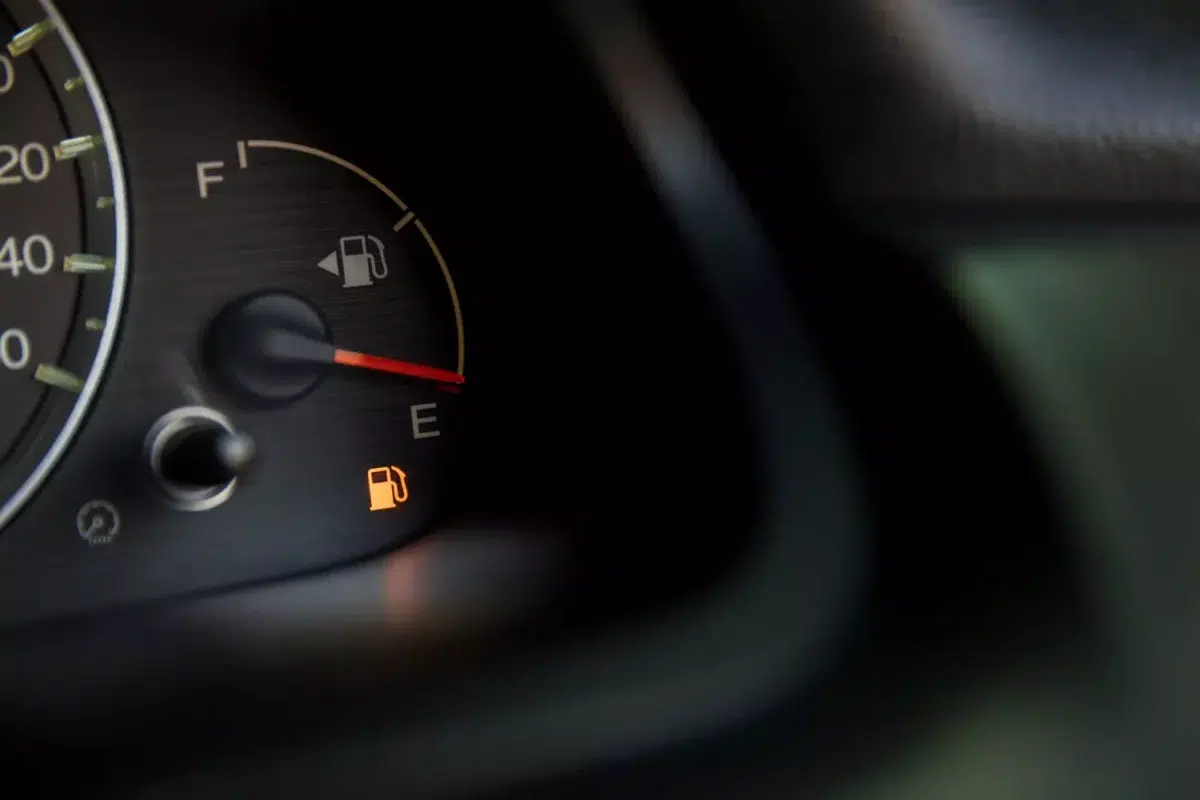
Many drivers experience a moment of panic when the needle on their fuel gauge approaches the letter marked “E”. While most assume this indicates a completely empty tank, the reality behind this dashboard symbol reveals something quite different. Understanding what this indicator truly represents can help you avoid unnecessary stress and protect your vehicle’s fuel system from potential damage.
The letter “E” stands for “Empty” in English, but this designation doesn’t mean your fuel tank has reached absolute zero. Automotive manufacturers design their fuel systems with built-in safety margins that trigger this warning well before the last drop of gasoline disappears. When the needle touches or passes this mark, your vehicle enters reserve mode, alerting you that refueling should become an immediate priority.
This reserve system serves as a protective buffer between normal driving and complete fuel exhaustion. Typically, between 5 and 15% of your tank’s total capacity remains available when the gauge reaches “E”. For most vehicles, this translates to approximately 50 to 80 additional kilometers of driving range, depending on your specific model and fuel type. Modern dashboard technology, similar to advances in OLED vs LCD reliability, has improved the accuracy of these fuel monitoring systems over recent years.
The exact amount of remaining fuel varies significantly based on several factors. Your driving style, road conditions, and vehicle specifications all influence how far you can travel on reserve. Highway driving typically extends your range more than stop-and-go city traffic, while aggressive acceleration and high speeds consume fuel more rapidly. Understanding these variables helps you make informed decisions when planning your route to the nearest gas station.
Operating your vehicle consistently with the fuel gauge hovering near “E” creates mechanical problems that can prove costly over time. The fuel pump, responsible for delivering gasoline from the tank to your engine, requires constant immersion in liquid to function properly. This fuel serves dual purposes : it acts as both a lubricant and a coolant for the pump’s internal components.
When fuel levels drop too low, the pump begins operating in conditions it wasn’t designed to handle. Running partially dry causes excessive wear on moving parts, dramatically shortening the pump’s lifespan. Additionally, the pump may start drawing from the very bottom of the tank, where sediment and debris naturally accumulate over months and years of use. These contaminants can clog fuel filters and damage sensitive injection systems.
| Fuel level | Pump condition | Risk level |
|---|---|---|
| Above 1/4 tank | Optimal operation | Low |
| Between E and 1/4 | Reduced cooling | Moderate |
| At or below E | Risk of dry running | High |
Repair or replacement of a damaged fuel pump represents a significant expense that could easily be avoided through better fueling habits. Professional mechanics consistently advise maintaining fuel levels above the quarter-tank mark whenever possible. This practice ensures optimal system performance while minimizing the risk of unexpected breakdowns, much like how proper maintenance prevents issues in complex systems such as Waymo robotaxis during power outages.
CarMechanics don’t talk about it, the battery’s real enemy isn’t the coldOn the opposite end of your fuel gauge sits the letter “F”, representing “Full”. This marker indicates maximum fuel capacity, providing the peace of mind that comes with knowing you have substantial driving range ahead. While reaching “E” activates reserve mode, maintaining levels closer to “F” offers numerous practical and mechanical advantages for your daily driving routine.
Strategic refueling habits protect your investment while providing operational flexibility. Consider these recommended practices for maintaining your vehicle’s fuel system :
- Refill your tank when it reaches the quarter mark rather than waiting for the low fuel warning
- Keep your tank at least half full during winter months to prevent condensation buildup
- Plan fuel stops during routine trips rather than making them emergency detours
- Monitor fuel prices and fill up when rates are favorable in your area
Modern navigation technology makes planning fuel stops easier than ever before. Applications like Google Maps with upgraded data can help you locate nearby stations efficiently. Advanced sensor technology, including innovations like thermal vision capabilities, continues improving how vehicles monitor and display critical information to drivers.
Treating the “E” indicator as an emergency backup rather than a normal operating condition preserves your vehicle’s longevity and reliability. Proactive fuel management reduces stress, saves money on repairs, and ensures you’re never stranded far from assistance. This mindset shift transforms fuel monitoring from a reactive scramble into a planned component of vehicle ownership.
The automotive industry continues evolving toward more sophisticated energy management systems. While traditional gasoline vehicles dominate current roads, even cutting-edge technology faces fuel-related challenges, as demonstrated when SpaceX lost control of a satellite after a fuel leak. Whether in space or on highways, proper fuel system maintenance remains critical across all transportation sectors.
Car9 out of 10 drivers don’t know this, what happens when you press this button?Infrastructure development also impacts how we approach refueling. As nations invest in transportation networks, such as China’s independent infrastructure projects, the relationship between technology and resource management becomes increasingly interconnected. Understanding your vehicle’s fuel gauge represents just one aspect of responsible vehicle operation in our connected world.
Your fuel gauge serves as more than a simple measurement device—it’s a sophisticated system designed to keep you safely on the road. By understanding what “E” really means and adopting better refueling habits, you protect your vehicle while gaining confidence behind the wheel. Remember that seeing “F” at the start of your journey always beats watching “E” during it.
