
Show table of content Hide table of content
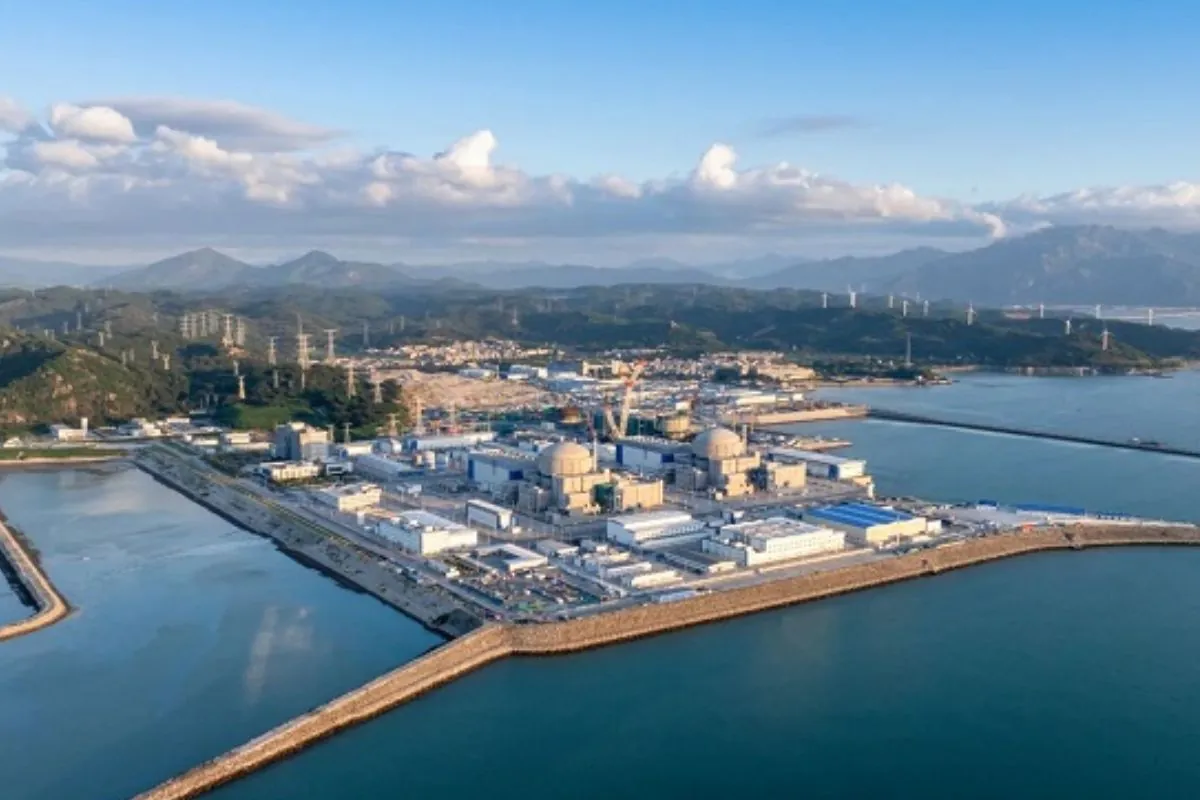
China’s nuclear energy sector continues to demonstrate unprecedented construction speed with the commercial activation of Zhangzhou Nuclear Power Plant’s second unit in January 2026. This achievement marks more than just another milestone in Chinese infrastructure development. It represents the completion of Phase I of what will become the world’s most powerful operational nuclear facility, adding 1,126 MW of clean energy capacity to southeastern China’s electrical grid.
Unprecedented construction timeline defies western standards
The Zhangzhou nuclear project demonstrates China’s ability to execute large-scale energy infrastructure at speeds unimaginable in western countries. Construction licenses for the first two units were issued in October 2019, with excavation beginning just one week later. The second unit followed in September 2020, maintaining an aggressive schedule that never wavered.
Unit 1 connected to the grid on January 1, 2025, while Unit 2 received its fuel loading in October 2025, achieved criticality in early November, and reached grid connection by month’s end. After completing the mandatory 168-hour testing period, operators received final approval for commercial operation. This five-year journey from groundbreaking to commercial operation stands in stark contrast to nuclear projects in Europe and North America, where decades-long delays have become the norm.
The project originated in 2011 when China National Nuclear Corporation partnered with China Guodian to establish a local joint venture. Located in Fujian Province facing Taiwan, near Xiamen, the facility occupies a strategic position both geographically and energetically. While western nations struggle with nuclear project management, China’s centralized planning and mobilized industrial base deliver results that reshape global energy discussions, much like the nation’s ambitious infrastructure initiatives in digital connectivity have transformed telecommunications landscapes.
Hualong One reactor technology drives standardized expansion
The Hualong One pressurized water reactor forms the technological backbone of Zhangzhou’s success. This third-generation Chinese-designed reactor represents a fully domesticated nuclear technology that has passed stringent safety reviews from British and European regulatory authorities. Each unit generates 1,126 MWe of electrical capacity through proven engineering principles adapted for rapid deployment.
China’s approach to reactor standardization contrasts sharply with western nations’ tendency toward customized designs. This standardization enables faster construction, simplified regulatory approval, and reduced costs. The Hualong One design has become China’s flagship nuclear export product, demonstrating reliability across multiple domestic installations before international deployment.
| Parameter | Specification |
|---|---|
| Reactor type | Pressurized Water Reactor (PWR) |
| Generation | Generation III |
| Electrical output | 1,126 MWe per unit |
| Design lifespan | 60 years |
| Safety features | Passive cooling systems, double containment |
The reactor’s success at Zhangzhou validates China’s nuclear engineering capabilities while demonstrating that indigenous technology development can compete with western designs. This technological independence supports China’s broader strategic objectives in energy security, similar to advances seen in fields ranging from satellite systems to innovative sensor technologies that push technological boundaries.
Strategic capacity expansion targets carbon neutrality goals
When fully operational with six reactors, Zhangzhou will generate 60 billion kWh annually of carbon-free electricity. This output will cover approximately 75% of combined electrical demand for Xiamen and Zhangzhou cities, powering millions of homes and businesses without greenhouse gas emissions. The facility directly supports China’s commitment to achieving carbon neutrality by 2060.
Phase II construction encompasses Units 3 and 4, which have entered advanced industrial preparation with preliminary work already underway. Civil engineering is scheduled to commence between 2026 and 2027, targeting commercial operation between 2029 and 2030. Phase III will follow immediately with Units 5 and 6, with regulatory approvals expected in the early 2030s and grid connection anticipated between 2032 and 2034.
China’s nuclear strategy recognizes that renewable energy sources alone cannot meet growing electricity demand while simultaneously eliminating fossil fuel dependence. Nuclear power provides baseload capacity that complements variable solar and wind generation. Key advantages include :
- Consistent power output regardless of weather conditions or time of day
- Minimal land footprint compared to equivalent renewable installations
- Long operational lifespans exceeding 60 years with proper maintenance
- Energy density that reduces fuel transportation and storage requirements
This integrated approach to clean energy development positions China as a global leader in practical climate policy implementation, demonstrating that rapid decarbonization requires diverse technological solutions rather than ideological commitments to single energy sources.
Global nuclear capacity rankings reveal operational realities
Upon completion of all six units, Zhangzhou will operate approximately 6,756 MW of installed capacity, positioning it as the world’s largest functional nuclear facility. Japan’s Kashiwazaki-Kariwa plant technically maintains higher capacity at 7,965 MW across seven reactors, but those units remain offline following the 2011 Fukushima disaster, with uncertain restart timelines.
Canada’s Bruce Nuclear Generating Station currently operates 6,550 MW through eight CANDU heavy water reactors, making it the largest actively generating nuclear facility as of early 2026. France’s Gravelines plant contributes 5,460 MW through six pressurized water reactors, while China’s Yangjiang facility generates 6,000 MW from six reactors combining CPR-1000 and Hualong One designs.
ScienceThis Austrian giant, standing at 570 feet, will be the first tower in Europe to feature this major innovation: an integrated photovoltaic facade.With Zhangzhou Unit 2’s activation, China National Nuclear Corporation’s total installed capacity reached 26,212 MWe, reflecting systematic capacity additions across multiple facilities. This methodical expansion contrasts sharply with western nations’ nuclear sectors, where aging plants face closure faster than new units enter service. The reliability demonstrated by modern nuclear facilities far exceeds early concerns, similar to how extended testing of display technologies has revealed superior longevity compared to initial projections.
China’s nuclear advancement doesn’t rely on dramatic announcements but rather on steady accumulation of operational megawatts. This approach reflects centralized planning, mobilized industrial resources, and explicit political prioritization of energy independence and climate objectives. While western nations debate nuclear’s role in energy transitions, China simply builds additional capacity, letting results speak louder than rhetoric. Unlike the setbacks seen in complex space operations such as satellite control challenges, China’s nuclear program maintains consistent operational success across expanding fleet installations, establishing new benchmarks for construction efficiency and technological deployment at scale.
