
Show table of content Hide table of content
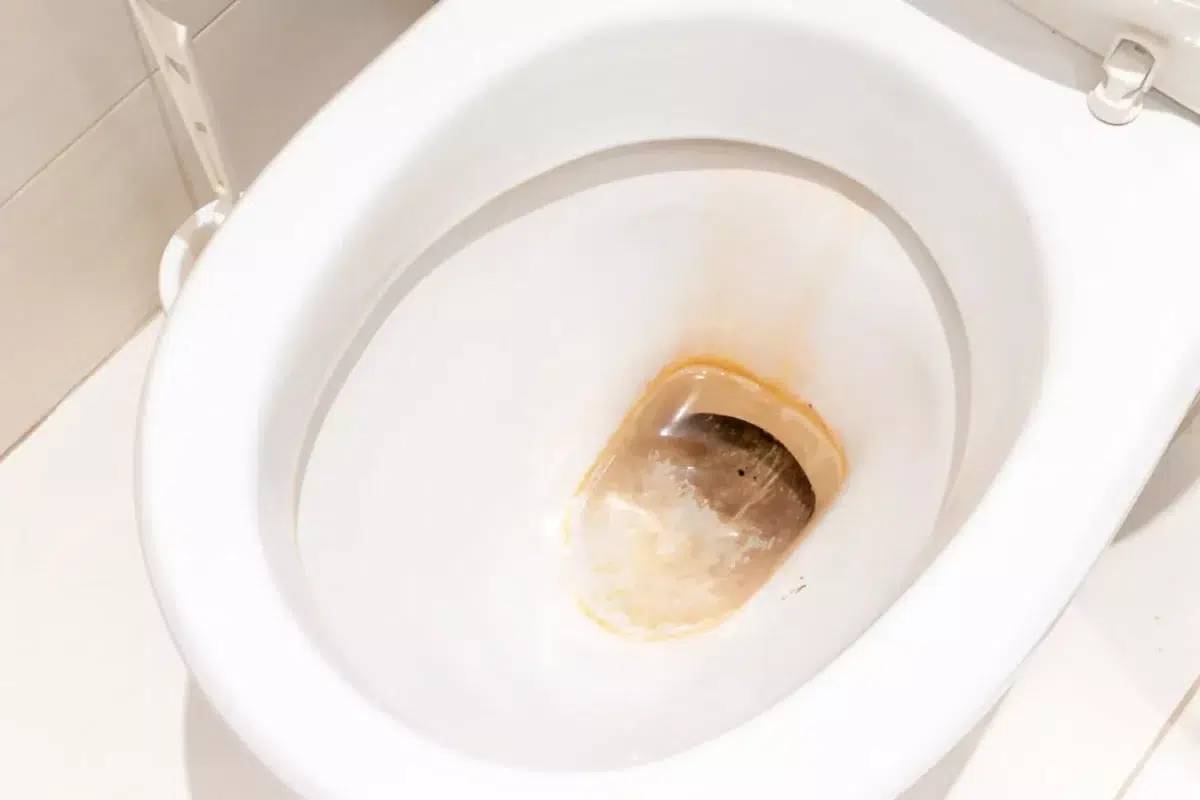
Hard water leaves behind stubborn mineral deposits that cling to toilet bowls, creating those unpleasant brown, pink, or grey rings most people dread cleaning. Commercial products line store shelves promising miracle results, yet many rely on harsh chemical formulas that harm both your bathroom surfaces and the environment. What if the answer was already sitting in your refrigerator ?
Why limescale builds up in your toilet bowl
Limescale is essentially a buildup of calcium and magnesium deposits left behind when hard water evaporates or flows through your plumbing. In regions where tap water carries a high mineral content, this process accelerates significantly. The toilet bowl, constantly exposed to water, becomes a prime target for these deposits.
Not every stain you see is actually limescale. Some marks are simply surface dirt that disappears with a standard toilet cleaner and a quick brush. True limescale stains resist ordinary cleaning products and tend to deepen in colour over time. If your stains stubbornly stay put despite regular scrubbing, you are almost certainly dealing with mineral buildup rather than simple grime.
Many homeowners reach for powerful chemical cleaners at this point. These products can work, but they often come with drawbacks : strong fumes, environmental impact, and a price tag that adds up quickly. Natural alternatives deserve serious consideration, and one of the most surprising options costs almost nothing. Just as a common kitchen ingredient can dissolve limescale overnight, certain everyday drinks share similar descaling properties.
The real culprit behind limescale’s tough grip is its alkaline chemical nature. Acids break it down effectively, which is exactly why solutions like white vinegar have long been a popular recommendation. However, vinegar is not the only acidic option available in your home — and it may not even be the most convenient one for toilet cleaning.
Coca-Cola, the surprising descaler hiding in your fridge
Coca-Cola contains phosphoric acid, a mild acid used across many industrial and food-grade cleaning applications. This compound is what gives the drink its slightly sharp, tangy taste — and it is precisely what makes it capable of attacking limescale deposits. Phosphoric acid works by breaking down the mineral bonds that hold calcium and magnesium deposits to your toilet bowl surface.
The carbonation in the drink also plays a supporting role. The fizzing action helps loosen surface deposits, giving the acid better contact with the stained areas. Together, these two properties make Coca-Cola a remarkably effective toilet descaler, especially for stains that have been building up for weeks or months.
HomeHere’s what it means when a plastic bag is covering a car’s side mirrorHere is how to use it step by step :
- Pour one to two cans of Coca-Cola directly into the toilet bowl.
- Make sure the liquid covers all affected areas, especially the waterline ring.
- Leave it to work for at least one hour — overnight for heavy buildup.
- Flush to rinse away the dissolved deposits.
- If any residue remains, a light brush will remove it with minimal effort.
The results surprise most people the first time they try this method. No vigorous scrubbing is required in most cases. The acid does the hard work while you simply wait. This makes it ideal for anyone who finds physical scrubbing difficult or simply wants a low-effort solution.
It is worth noting that leaving Coca-Cola overnight produces the best results on older, deeper stains. For fresh deposits, an hour is usually sufficient. You can use any cola-based drink with phosphoric acid, as the brand matters far less than the ingredient itself.
Comparing Coca-Cola to other common limescale removal methods
To put this method in context, here is a quick comparison of popular toilet limescale removal approaches :
| Method | Active ingredient | Scrubbing needed | Eco-friendly | Cost |
|---|---|---|---|---|
| Coca-Cola | Phosphoric acid | Minimal | Moderate | Very low |
| White vinegar | Acetic acid | Some | High | Very low |
| Commercial descaler | Strong acids/chemicals | Little | Low | High |
| Baking soda + vinegar | Acetic acid + CO₂ | Moderate | High | Very low |
If you are searching for the most effective product against bathroom limescale, testing multiple methods is always worthwhile. Results can vary depending on your local water hardness and the age of your stains.
Making the most of household products beyond the bathroom
Once you discover how effective everyday products can be against stubborn household problems, it opens up a new way of thinking about cleaning. Items already present in your home often outperform expensive specialist products in surprising situations.
For example, weeds can disappear in just one day using a product most people already keep at home — no expensive herbicides required. The same principle applies to the Coca-Cola toilet trick : accessible, low-cost solutions frequently deliver excellent results.
HomeMosquitoes are already coming back — an expert explains when to act to avoid an infestationMaintaining a clean home does not have to mean spending heavily on specialist products. Being observant about what you already own — and understanding the chemistry behind it — puts practical solutions within easy reach. And remember that overlooked spots like the dirtiest corner of your microwave often respond just as well to simple household ingredients.
Keeping your toilet bowl free of limescale no longer requires harsh chemicals or exhausting elbow grease. A couple of cola cans and a little patience are genuinely all it takes.
