
Show table of content Hide table of content
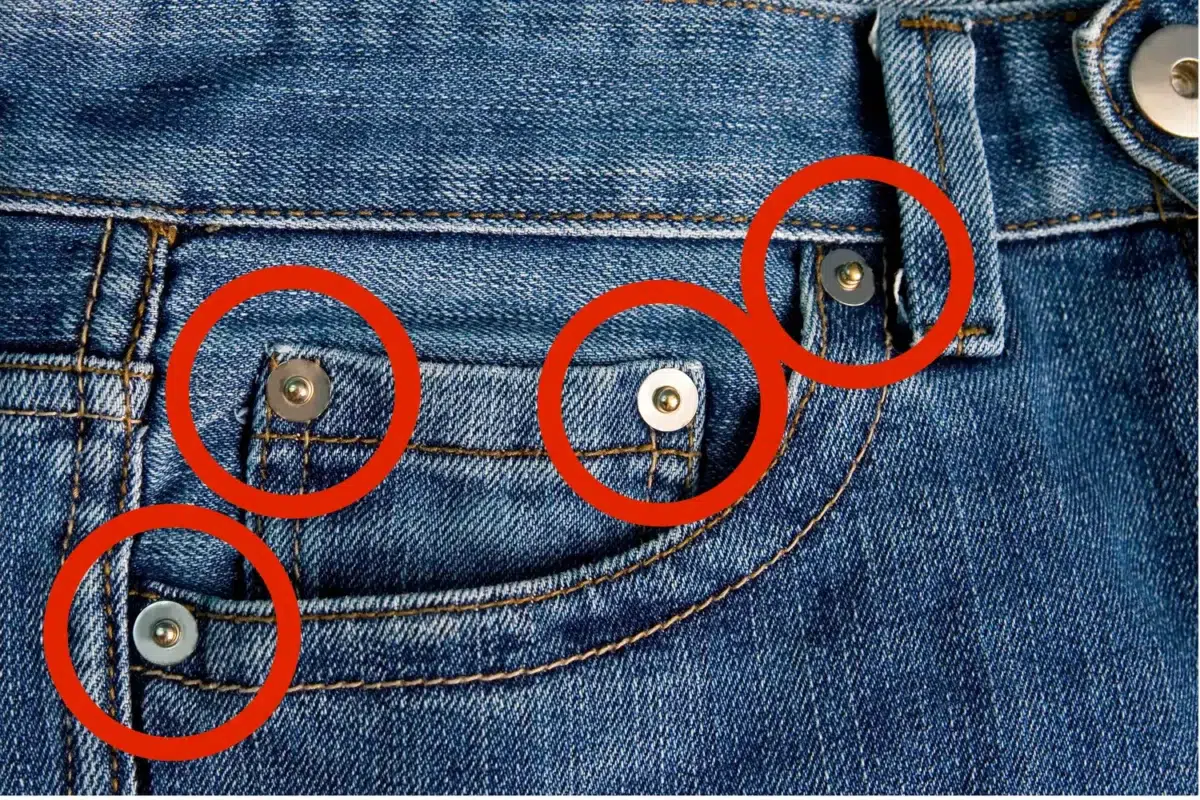
The denim trouser stands as one of the most universal garments across the globe, worn daily by countless individuals. Yet despite this widespread adoption, jeans harbour fascinating details that often escape our attention. Among these intriguing features are the small metal buttons strategically placed near the pockets. Have you ever stopped to wonder about their purpose, especially since regular trousers don’t feature such embellishments ?
The historical invention behind these metal fasteners
These metallic elements, typically crafted from copper, possess a remarkable history dating back to the industrial era. During the 1800s, workers faced a persistent problem with their work trousers. The constant physical demands of manual labour caused seams to tear repeatedly, particularly around areas subjected to significant stress and pulling. This recurring issue represented not just an inconvenience but a genuine economic concern for labourers who couldn’t afford frequent clothing replacements.
In 1873, an innovative tailor observed this widespread problem among working-class individuals. Levi Strauss, who would later establish one of the world’s most recognisable denim brands, recognised an opportunity to address this practical challenge. His solution proved revolutionary yet elegantly simple : he decided to reinforce the vulnerable stress points by incorporating small copper rivets. This ingenious modification transformed the durability of work trousers dramatically, preventing seams from splitting prematurely and extending the garment’s lifespan considerably.
The implementation of these copper reinforcements contributed significantly to the success of Strauss’s enterprise. Workers quickly recognised the superior quality and longevity of these reinforced trousers. What started as a practical solution for miners and manual labourers soon became an industry standard. The innovation established denim jeans as virtually indestructible workwear, building a reputation that endures today.
From patent protection to universal adoption
While Levi’s secured patent protection for the cut and design of their iconic 501 model, the rivet reinforcement technology itself entered the public domain in 1908. This transition proved significant for the entire clothing industry. Once the patent expired, manufacturers across the spectrum began incorporating these metal fasteners into their own denim products, regardless of brand reputation or price point.
| Period | Status of rivet technology | Impact on industry |
|---|---|---|
| 1873-1908 | Patent protected | Exclusive to Levi’s brand |
| 1908-present | Public domain | Universal adoption across manufacturers |
This widespread adoption solidified the rivets as an iconic element of authentic denim design. Today, these copper fasteners appear on jeans from premium fashion houses to budget-friendly retailers. Their presence has become so synonymous with denim that their absence would render a jean somehow incomplete or inauthentic in the eyes of consumers.
Modern relevance and contemporary challenges
Contemporary manufacturing techniques have evolved considerably since the nineteenth century. Advanced stitching methods and improved textile engineering now provide sufficient strength to withstand the stresses that once caused seams to fail. This technological progress raises an interesting question : do these metallic fasteners still serve a functional purpose, or have they become purely decorative ?
The answer lies somewhere between tradition and aesthetics. Modern jeans could theoretically survive without rivets from a structural standpoint. However, these small copper buttons have transcended their original utilitarian purpose to become symbolic elements. They represent authenticity, heritage, and the working-class origins of denim culture. Removing them would strip jeans of a defining characteristic that connects contemporary wearers to the garment’s storied past.
Consider the following reasons why manufacturers maintain this traditional feature :
- Consumer expectations have been shaped by decades of consistent design
- Brand identity relies heavily on these recognisable details
- Historical authenticity appeals to fashion-conscious buyers
- The visual signature distinguishes genuine denim from imitations
Environmental considerations and future possibilities
Despite their iconic status, these metal reinforcements present significant challenges in our environmentally conscious era. Denim fabric itself remains highly recyclable and can be repurposed into new textiles or other products. However, the presence of copper rivets complicates the recycling process considerably. These metallic elements must be removed before fabric processing, adding time, labour costs, and complexity to sustainability efforts.
TechnologyIKEA is bringing back the retro armchair our grandmothers loved in the 1950s — and everyone is snapping it upThe fashion industry faces mounting pressure to reduce its environmental footprint. Denim production already carries a substantial ecological burden, consuming vast quantities of water and chemicals during manufacturing. The additional recycling complications introduced by these metal fasteners exacerbate sustainability concerns. Some forward-thinking manufacturers have begun exploring alternatives, including biodegradable reinforcement methods or easily removable fastening systems.
Yet tradition proves difficult to overcome. The symbolic value of these copper buttons remains deeply embedded in consumer consciousness and brand identity. Any move to eliminate them risks alienating customers who associate these details with authentic, quality denim. This tension between environmental responsibility and cultural heritage represents one of the fashion industry’s ongoing dilemmas. As we progress further into the twenty-first century, brands must balance respect for historical craftsmanship with urgent sustainability imperatives, potentially reimagining how we reinforce and recognise genuine denim products.
