
Show table of content Hide table of content
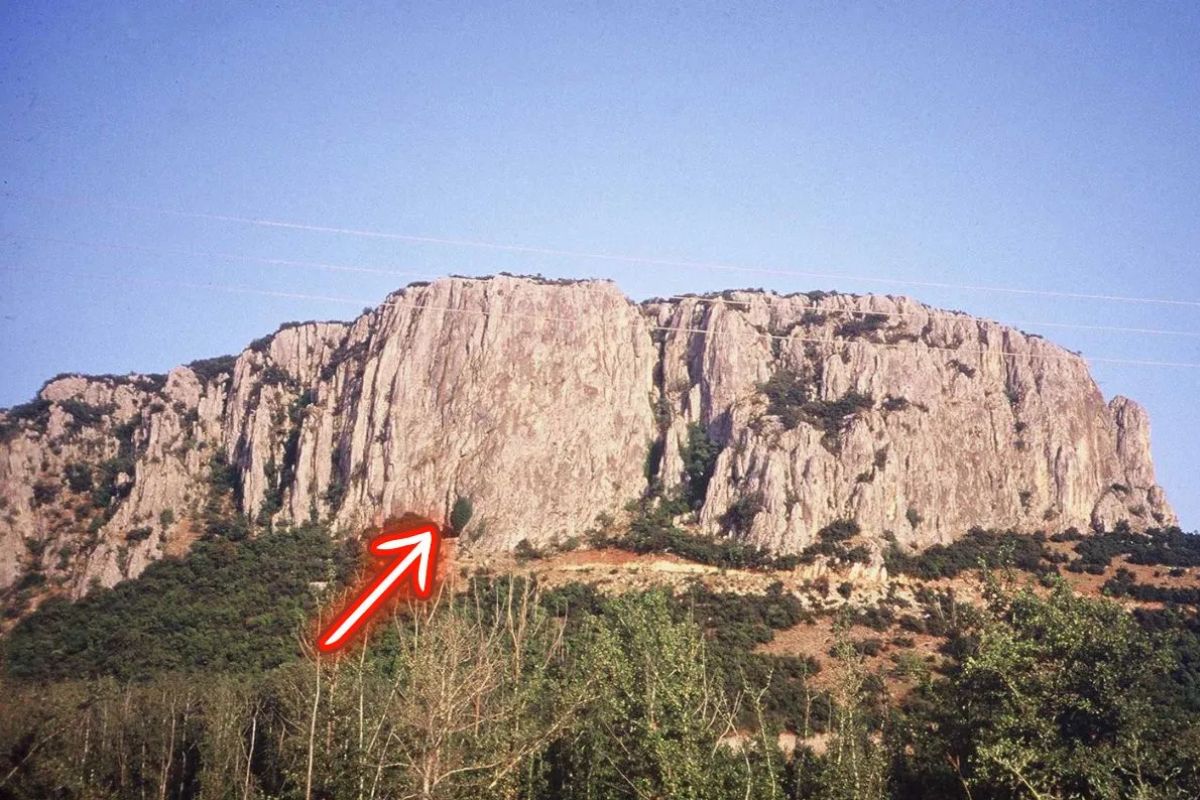
In central Greece, a limestone cave perched on a cliff face harbors evidence of one of humanity’s most remarkable prehistoric achievements. The Theopetra Cave in Thessaly, located just three kilometers from the famous Meteora formations, contains a stone wall dating back approximately 23,000 years, making it potentially the oldest known human-built structure on Earth. This discovery challenges our understanding of early human ingenuity and adaptation during one of the harshest periods in prehistoric times.
A shelter inhabited for over 130 millennia
The limestone formation housing Theopetra Cave originated during the Cretaceous period, between 137 and 65 million years ago. However, human occupation began around 130,000 years ago, when Neanderthals likely first sought refuge within its protective walls. Archaeological excavations initiated in 1987 under Dr. Catherine Kyparissi-Apostolika revealed nearly continuous habitation extending through the Middle Paleolithic era all the way to the end of the Neolithic period, approximately 3,000 BCE.
The site has yielded an extraordinary array of artifacts that paint a vivid picture of prehistoric life. Researchers have uncovered stone tools, shell jewelry, fire traces, burial sites, and even fossilized footprints of children. These discoveries demonstrate that Theopetra served as more than a temporary shelter; it was a home where multiple generations lived, worked, and developed their culture across millennia.
The successive archaeological layers provide tangible evidence of human evolution and cultural development. Items from the Paleolithic, Mesolithic, and Neolithic periods coexist within the cave’s sediments, alongside bone implements, shell objects, and Neolithic pottery fragments. Analysis of organic remains shows that later inhabitants cultivated and consumed wheat, barley, olives, and various meats, indicating a transition from hunting-gathering to early agricultural practices.
Engineering survival during the Ice Age
The most spectacular discovery at Theopetra remains the ancient stone wall constructed during a severe glacial period. This structure, built using stones bound with clay mortar, blocked approximately two-thirds of the cave entrance, reducing the opening to roughly one meter in width. The construction technique, though primitive by modern standards, represents a sophisticated understanding of environmental modification for survival purposes.
Scientists believe this architectural feat served a critical function : protection against extreme cold that gripped Europe during the Last Glacial Maximum. The wall’s strategic placement and construction demonstrate that our prehistoric ancestors possessed :
- Advanced planning capabilities to anticipate seasonal weather changes
- Collaborative skills necessary to transport and position heavy limestone blocks
- Technical knowledge of material properties and structural stability
- Problem-solving abilities to adapt natural shelters for enhanced protection
This innovation marks a pivotal moment in architectural history, predating the Egyptian pyramids by over 15,000 years. While monuments like the Pyramid of Kheops (constructed around 2,560 BCE) capture popular imagination, Theopetra’s wall represents humanity’s earliest documented attempt to permanently alter the environment for improved living conditions.
Comparative analysis of ancient structures worldwide
To appreciate the significance of Theopetra’s wall, examining other ancient constructions provides valuable context. The following table illustrates how this Greek discovery compares to other remarkable prehistoric and ancient buildings :
| Structure Name | Location | Approximate Date | Type |
|---|---|---|---|
| Theopetra Cave Wall | Greece | 21,000 BCE | Protective stone barrier |
| Çatalhöyük | Turkey | 7,400 BCE | Neolithic settlement |
| Barnenez Cairn | France | 4,800 BCE | Megalithic tomb |
| Stonehenge | England | 3,000–2,000 BCE | Ceremonial stone circle |
| Pyramid of Kheops | Egypt | 2,560 BCE | Royal tomb |
The chronological gap between Theopetra and subsequent monuments is staggering. While structures like the Tarxien Temples in Malta (3,500–2,500 BCE) or France’s Tumulus Saint-Michel (4,500 BCE) represent impressive achievements, they emerged thousands of years after prehistoric inhabitants of Thessaly first manipulated stone for architectural purposes.
Climate adaptation and cultural continuity
Research at Theopetra has revealed that occupation patterns fluctuated in response to major climatic shifts throughout prehistory. Evidence suggests periodic abandonments during particularly harsh glacial episodes, followed by reoccupation when conditions improved. This cyclical pattern demonstrates remarkable resilience and adaptability among prehistoric communities who returned generation after generation to this protected location.
The cave’s strategic importance extended far beyond prehistoric times. Historical records and archaeological evidence indicate that later civilizations continued utilizing Theopetra during periods of conflict as a refuge, and subsequently as livestock enclosures. This continuous relevance across vastly different historical periods underscores the site’s exceptional geographic and practical advantages.
ScienceThis Austrian giant, standing at 570 feet, will be the first tower in Europe to feature this major innovation: an integrated photovoltaic facade.Burial practices documented at the site, dating between 15,000 and 7,000 years ago, provide intimate glimpses into prehistoric spiritual beliefs and social structures. These interments suggest that small family groups regularly used Theopetra, developing attachments strong enough to choose it as their final resting place.
Preserving humanity’s earliest architectural achievement
Today, Theopetra Cave remains closed to public access to protect this fragile heritage from environmental degradation and human interference. Ongoing excavations continue revealing new information about Europe’s earliest inhabitants, their funeral customs, dietary habits, and capacity for innovation. Each archaeological season brings fresh insights into how our ancestors thought, lived, and survived in challenging conditions that would test even modern humans.
The significance of this 23,000-year-old wall extends beyond its impressive age. It represents tangible proof that human ingenuity, problem-solving, and environmental adaptation have deep evolutionary roots. Long before the emergence of writing systems, monumental temples, or organized civilizations, people in Thessaly demonstrated cognitive abilities and technical skills that enabled not merely survival, but purposeful environmental modification to improve quality of life during Earth’s harshest climatic periods. This humble stone barrier stands as testament to humanity’s enduring drive to overcome adversity through innovation and collective effort.
